Does Insurance Cover Roof Replacement in Texas? What Policies Typically Pay For
May 18, 2026 · 9 min read · By the LoneRidge Roofing Team

Does insurance cover roof replacement in Texas? Sometimes — when a covered event like hail or wind functionally damages the roof, and after your deductible and policy terms are applied. It does not cover old age, wear, or neglected maintenance. This guide explains what Texas homeowners policies typically cover and exclude, the crucial difference between actual cash value and replacement cost value, how percentage wind and hail deductibles work, and the decision timelines Texas law requires from your insurer, so you can approach a claim with clear expectations.
What Texas Homeowners Policies Typically Cover
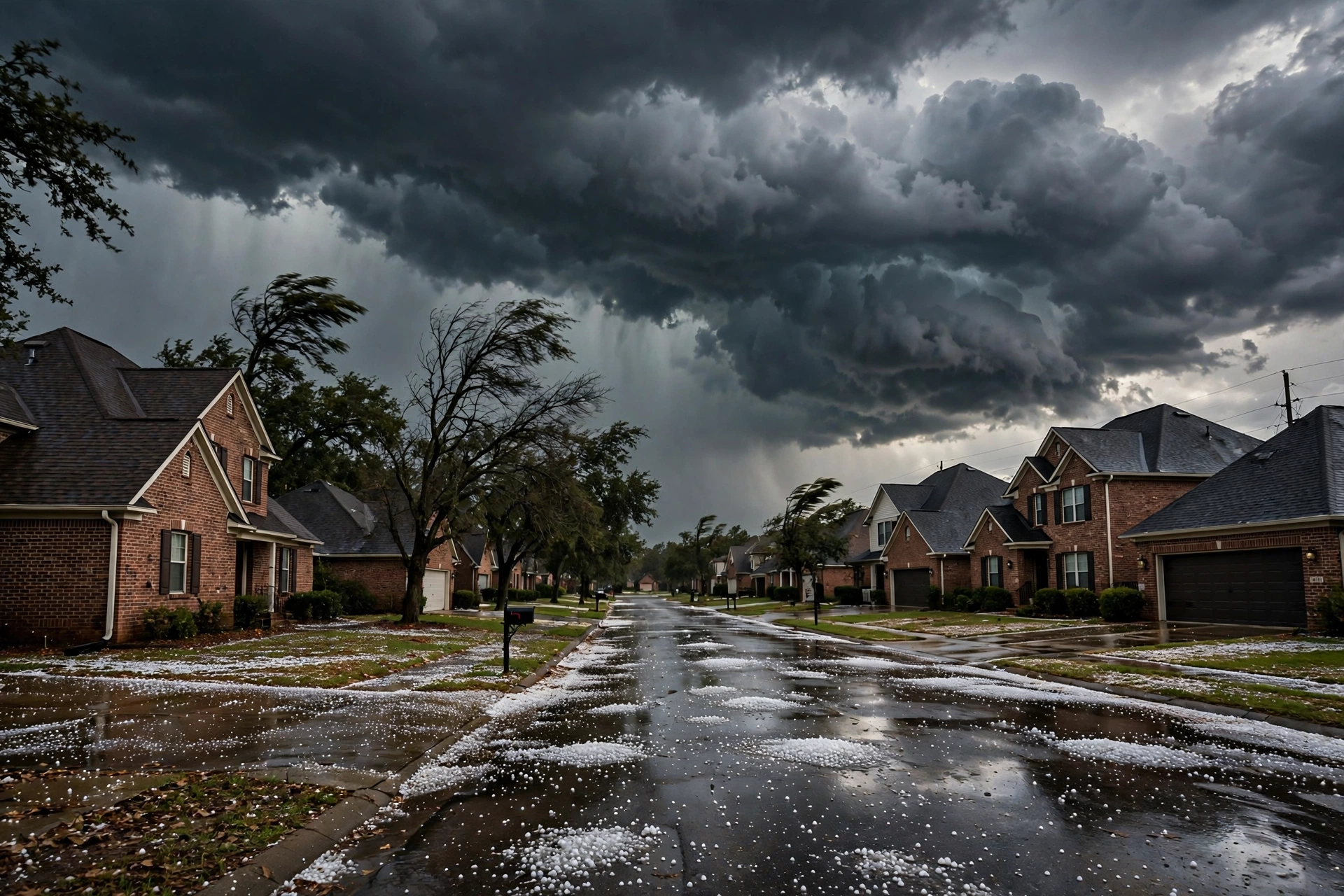
Standard homeowners policies are built around sudden, accidental events. For roofs in Texas, that usually means damage from hail, windstorms, falling objects such as tree limbs, and fire. If a hailstorm cracks shingle mats across multiple slopes or wind lifts and creases shingles beyond repair, that kind of sudden functional damage is the core of a typical roof claim. Coverage generally aims to restore the damaged portion of the roof system, subject to the policy language, limits, and deductible.
What gets approved — repair of a slope, or full replacement — depends on the extent of covered damage, the age and condition of the roof, whether materials can be matched, and any endorsements or schedules in your specific policy. Some Texas policies pay roofs on a scheduled, depreciated basis as they age. Reading your declarations page and any roof-specific endorsement before a storm season is one of the most valuable hours a Texas homeowner can spend.
What Policies Typically Do Not Cover
Insurance is not a maintenance plan. Gradual wear, shingles simply reaching the end of their life, blistering from age and heat, improper installation, and leaks caused by long-worn flashing are typically excluded, even if a storm made an old problem more noticeable. Damage that predates the policy period, cosmetic dents to metal that do not affect function, and interior damage from a leak you left unaddressed for months can also fall outside coverage.
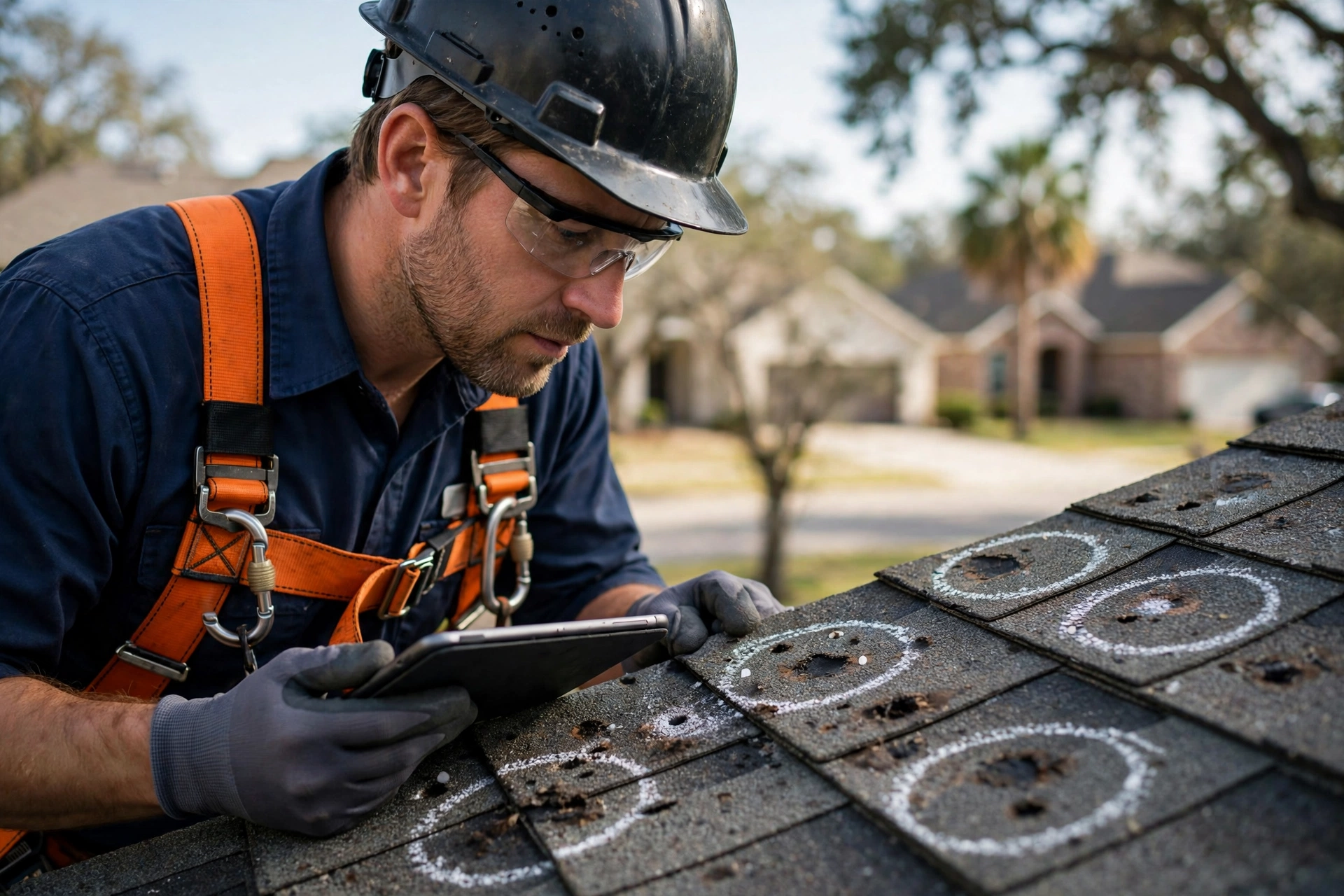
This is where honest inspections protect you. If a roofer documents hail impacts but your roof also has clear aging issues, expect the conversation to separate the two. Filing for storm damage is reasonable when a covered event caused functional harm; expecting a policy to fund a worn-out roof is not, and it leads to denials and frustration. Know which problem you actually have before deciding how to proceed.
- ★Typically covered: sudden hail, wind, and falling-object damage
- ★Typically excluded: age, wear, deterioration, and poor installation
- ★Cosmetic damage without functional harm is often excluded
- ★Pre-existing and long-neglected damage is commonly denied
ACV vs. RCV: The Difference That Decides Your Check
Two policies can approve the same roof and pay very different amounts because of how they value it. Actual cash value, or ACV, pays the depreciated value of your roof at the time of loss — a fifteen-year-old roof is worth far less than a new one, so the ACV payment reflects that reduced value. Replacement cost value, or RCV, is designed to pay the cost to replace with similar materials, but usually in stages: an initial ACV payment, with the withheld depreciation released after the work is completed and documented.
Many Texas policies blend the two, or shift older roofs to ACV-only or a payment schedule. Ask your agent three direct questions: Is my roof covered at RCV or ACV? Is there a roof payment schedule based on age? And how is depreciation recovered after completion? The answers determine your real out-of-pocket exposure far more than the headline coverage limit on your declarations page.
Deductibles, Including Percentage Wind and Hail Deductibles
Your deductible is the portion of a covered loss you pay, and in Texas it deserves special attention. Many policies carry a separate wind and hail deductible expressed as a percentage — commonly 1% or 2% — of the home insured value, not of the roof cost. On a home insured for $400,000, a 1% wind and hail deductible is $4,000, and 2% is $8,000. That number can exceed the cost of a moderate repair entirely, which changes whether filing makes financial sense.
And one rule is absolute: it is illegal in Texas for a contractor to waive, absorb, or rebate an insurance deductible. A contractor who offers to cover it is violating state law, and homeowners should treat that offer as a disqualifying red flag. Budget for your deductible as your real, required contribution to any claim, and be skeptical of any math that pretends it away.
Texas Insurance Code Chapter 542: The Timelines
Texas Insurance Code Chapter 542 sets prompt-payment timelines insurers must follow on claims. In general terms: the insurer must acknowledge receipt of your claim within 15 days after receiving it. After you have provided all required documentation and information the insurer has requested, the insurer must accept or deny the claim within 15 business days. If the claim is approved, payment is due within 5 business days after approval. Special circumstances, such as catastrophe volume or a claim under investigation under specific policy provisions, can affect timing, and your insurer should communicate those reasons.
These timelines are a framework for follow-up, not a reason for conflict. Track your submission dates, keep copies of everything you send, and note when requested documentation was delivered, since that delivery starts the decision clock. If deadlines pass without communication, a written inquiry referencing the dates is appropriate, and persistent problems can be raised with the Texas Department of Insurance. Documentation and dates are your leverage throughout.
So, Will Insurance Cover Your Replacement?
Work through a simple sequence. First, confirm a specific covered event and functional damage with a documented inspection. Second, read your policy: RCV or ACV, any roof schedule, and your wind and hail deductible amount in dollars. Third, compare the likely covered scope against that deductible — if damage is modest and below or near the deductible, paying for repairs directly is often cleaner. If damage is extensive, filing may be the right call.
Whatever the outcome, choose help carefully. A trustworthy contractor will inspect first, explain findings with photos, discuss policy realities honestly without guaranteeing an approval no one can promise, and put scope and materials in writing. Guarantees of a free roof, pressure to file before you have read your policy, and deductible tricks are signs to walk away. Informed homeowners get better outcomes than hurried ones, in claims as in roofing.
Not Sure What Your Roof Needs?
Get a photo-documented inspection and decide with evidence.
Questions, Answered
It can, when a covered event like hail or wind causes functional damage extensive enough that replacement is the appropriate scope, and subject to your deductible, RCV or ACV terms, and any roof payment schedule. It does not cover replacement simply because a roof is old or worn out.
It is 1% of the insured value of your home, not of the repair bill. On a home insured for $350,000, a 1% deductible is $3,500 and a 2% deductible is $7,000. Check your declarations page for the exact percentage and coverage amount that apply to your policy.
Under Texas Insurance Code Chapter 542, the insurer generally must acknowledge a claim within 15 days, accept or deny within 15 business days after receiving all required documentation, and pay within 5 business days after approval, with specific exceptions the insurer should explain.